
Old Friends
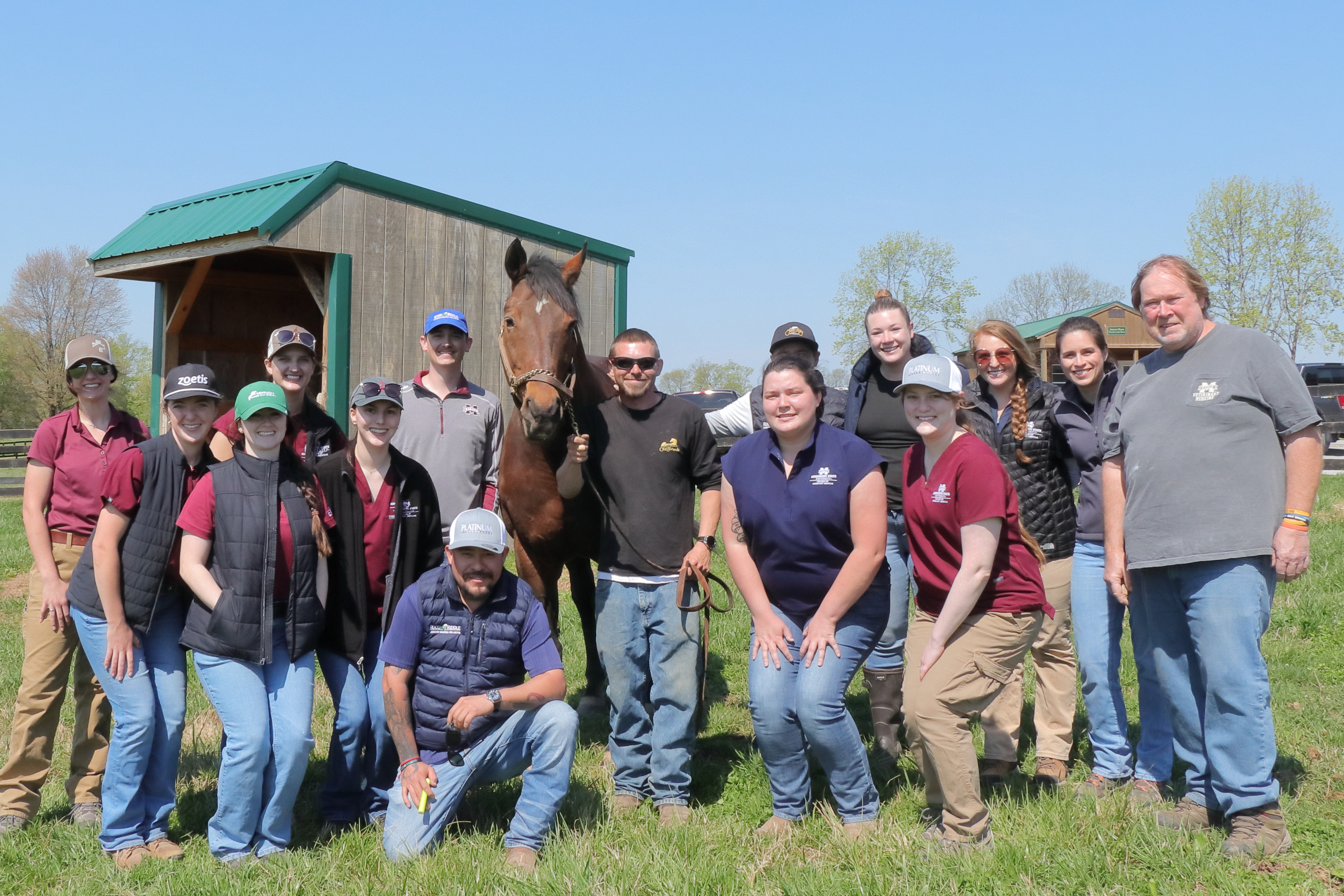
Mississippi State University College of Veterinary Medicine students recently gained hands-on experience in equine care through a multi-day field visit to Old Friends Farm, a retirement facility that houses more than 250 former racehorses. These horses, often considered the “senior population” of the equine world, require specialized and ongoing veterinary management.
The trip, led by Dr. Bryan Waldridge, associate clinical professor and service chief of Equine Internal Medicine at the MSU College of Veterinary Medicine, is conducted twice annually as part of experiential learning in equine medicine. Field-based opportunities like this allow veterinary students to apply classroom knowledge in real-world settings while developing clinical reasoning, technical skills, and professional confidence.
“The support and welcome from everyone at Old Friends is making a difference for equine interested students at Mississippi State University,” he said. “Experiences such as meeting Kentucky Derby winners, seeing Keeneland, being introduced to thoroughbred aftercare and meeting people who work in the Kentucky equine industry have exposed our students to new career paths and promotes their interest in equine veterinary practice.”
During the visit, students performed essential preventive care procedures, including vaccinations and deworming across multiple groups of horses, while also assisting in the diagnosis and management of clinical cases such as colic, hoof injury and pigeon fever, an infectious condition that has become increasingly prevalent in that region. They also conducted an evaluation on Game On Dude, a gelding that won $7 million and raced until he was 7 years old, and is nominated for the Thoroughbred Racing Hall of Fame.
In addition to clinical work, the experience exposed students to the broader equine industry and potential career pathways. Visits to facilities such as Rood & Riddle Equine Hospital and the Lexington Equine Medical Group provided insight into advanced surgical, dental and specialty care.
At Keeneland Racecourse, students also learned about the role veterinarians play in regulatory oversight, equine safety and race-day protocols within the thoroughbred racing industry.
This immersive training experience highlights the integration of preventive medicine, disease recognition and treatment, geriatric care, and industry awareness, while reinforcing the responsibility veterinarians have in supporting the lifelong health and welfare of animals, including those transitioning out of athletic careers.
“Every veterinarian should give back to the animals that help make their living,” Waldridge said. “It is hugely rewarding to me to take students to Old Friends Farm. I proudly tell them that I never got to work on a Kentucky Derby winner in veterinary school at Auburn University, but they can.”