
Tobasco’s Fight Against the Odds
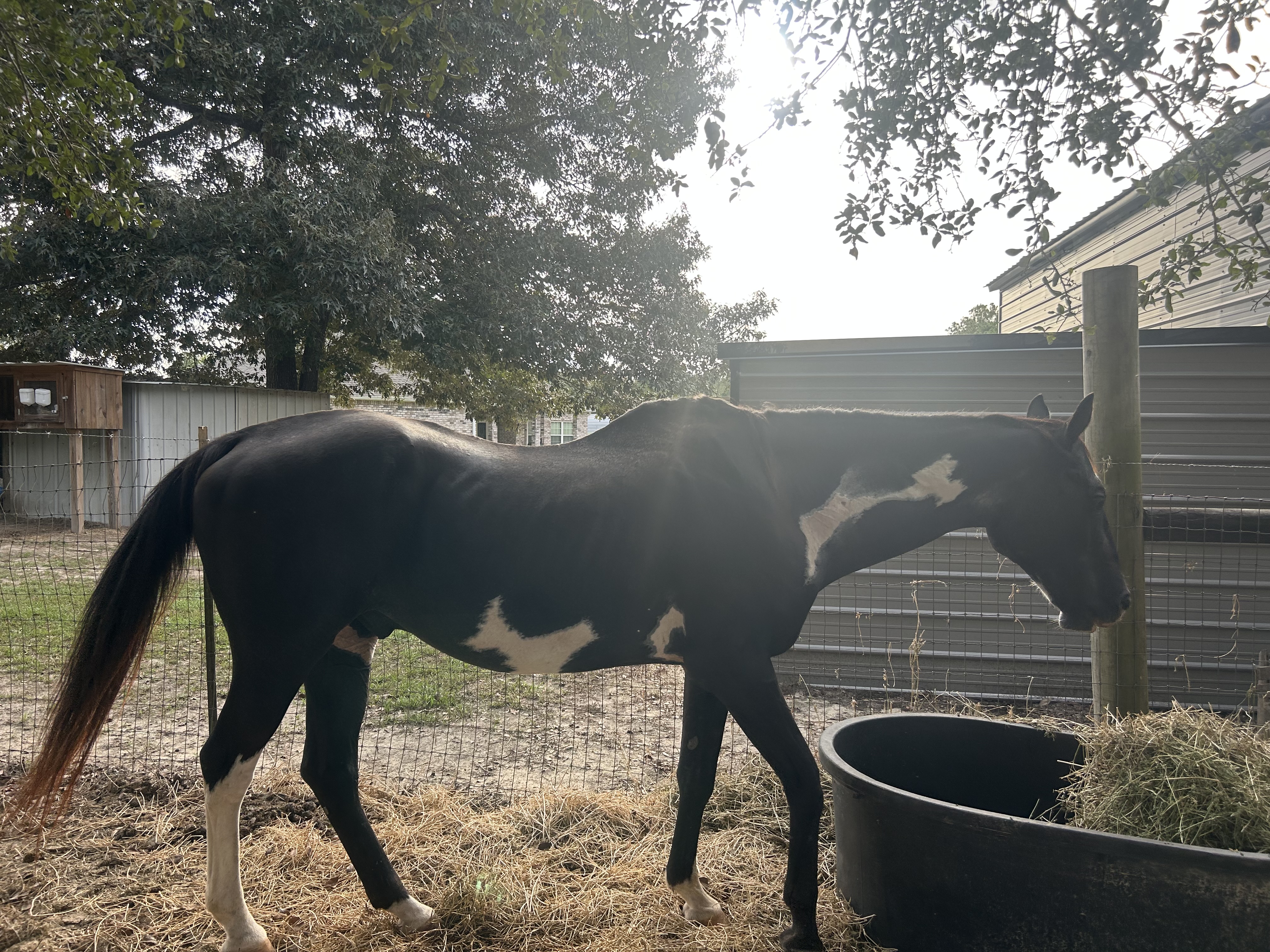
Christy Ladner’s life was one of many that would be changed forever on August 29, 2005, as Hurricane Katrina brought unimaginable devastation to the Mississippi Gulf Coast and parts of Louisiana.
Ladner had spent days preparing for the storm, including ensuring that her horses had access to their pasture but would still be able to take cover in the hurricane-safe barn if needed. Just before she left her home in Lakeshore – an unincorporated community near the mouth of the Pearl River – she made sure to write her phone number on each horse’s halter. Then, she evacuated to nearby Bay St. Louis to be with her elderly grandparents.
That left four horses in Lakeshore: Ladner’s three included five-year-old gelding Tobasco, mare Minnie Pearl and her five-month-old colt, Zydeco. Dixie, an older mare that belonged to Ladner’s cousin, was also staying on the property.
Katrina made landfall as a powerful Category 3 storm, bringing with it catastrophic winds, rain and flooding. As conditions worsened, Dixie escaped through a break in the fence. The waters began rising shortly afterwards, sweeping the remaining trio of horses up as it surged to roughly 25 feet deep.
Tobasco swam alongside Minnie Pearl and Zydeco in the murky, churning water until the mare and colt became too tired to continue. Nearby neighbors, who were stranded and floating on the remnants of their home, watched as Tobasco continued fighting to keep his head above the surface. After 10 hours, the flood receded, leaving Tobasco severely injured, but alive.
Three days later, Ladner was finally able to return to Lakeshore, making it through fallen trees and entire houses that had been thrown and washed into the road. There, she found Tobasco waiting for her, with major lacerations on his legs, back and withers caused by being struck by debris in the water.
Tobasco was transported to a friend’s home in Kiln before being sent to Hattiesburg, where rescue groups and response teams were staged to help with stranded, injured animals. Among the individuals helping were Andrea Brownstein, a licensed veterinary technician who was deployed to help in the aftermath of Katrina as part of the Veterinary Medical Assistance Team (VMAT). The VMTA was requested by the Mississippi Board of Animal Health to assist the Mississippi Animal Response Team following the hurricane.
“Poor guy had been through so much trauma and then stuck in a strange place with strangers poking and prodding, yet he seemed to understand we were there to help,” said Brownstein, who has since been on six deployments to assist animals impacted by disasters.
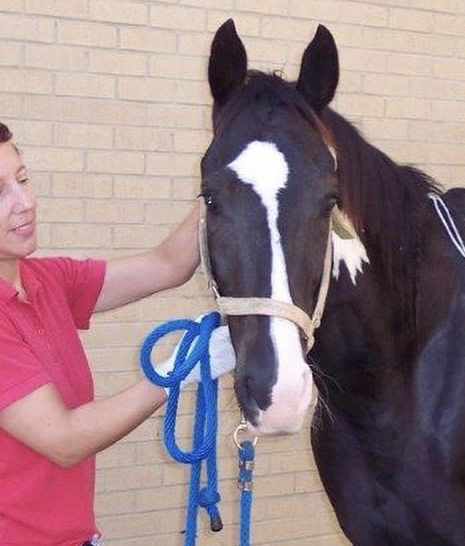
After receiving cold washes and treatments to remove the baked-on mud from his body and clean his infected wounds, the decision was made to send Tobasco to the Mississippi State University College of Veterinary Medicine for surgery and extensive care. He spent several months in recovery at the CVM, with Ladner making the four-hour trip to Starkville almost every weekend and checking in often as she continued cleanup on the Coast.
“During Tobasco’s stay at MSU, I frequently communicated with Clay McCurley, who was a student there at the time,” Ladner explained. “Clay kept me updated on Tobasco’s progress and was always willing to answer questions, which provided tremendous reassurance during a difficult period.”
The majority of Tobasco’s injuries healed completely, aside from an area on his withers where hair has never grown back. Perhaps most importantly, none of the trauma that he experienced broke his spirit.
“Despite everything he endured, Tobasco has always maintained an exceptional temperament,” Ladner explained. “He is calm, easygoing and gets along well with other horses.”
Much of that can be attributed to the dedication of the faculty, staff and students at the CVM, many of whom still remember Tobasco fondly more than two decades later.
“The entire team at MSU was incredibly knowledgeable, compassionate and professional,” Ladner said. “Their dedication to Tobasco’s care gave me complete confidence in the treatment he was receiving and made it much easier to leave knowing he was in such capable hands. Their efforts played a significant role in Tobasco’s recovery, and I will always be grateful for the care and support they provided.”