
Marine Life Medicine Takes Veterinary Students Beyond the Classroom to the Mississippi Gulf Coast
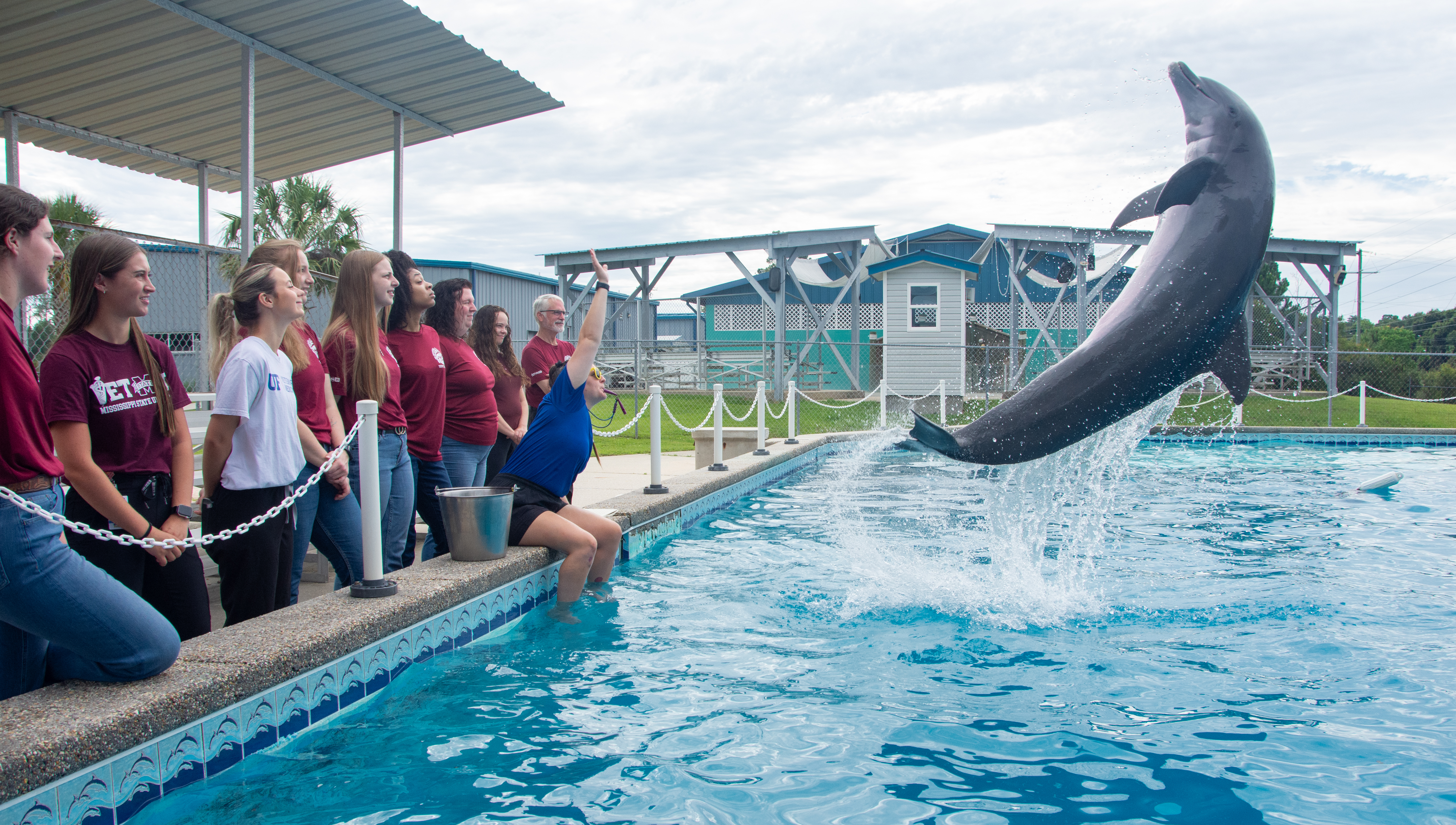
Mississippi State University College of Veterinary Medicine (MSU CVM) students recently traded the classroom for the Mississippi Gulf Coast as part of CVM 5892: Marine Life Medicine, a course in the College's Certificate in Aquatic Animal Health. Through partnerships with leading marine animal institutions, students gained firsthand experience with the clinical care, husbandry, rehabilitation and management of a diverse range of aquatic species while learning directly from experts working in the field.
Mississippi State University College of Veterinary Medicine is one of only two veterinary colleges in the United States offering a formal certificate in aquatic animal health, providing students with specialized educational opportunities that are rarely available in veterinary curricula.
The Certificate in Aquatic Animal Health is a 15-credit-hour program that provides DVM students with specialized training in diagnosis, clinical management and health of aquatic animal species. Through a combination of classroom instruction, laboratory experiences and field-based learning, the program prepares graduates for careers in private practice, public aquariums, zoological medicine, aquaculture, government agencies, research and wildlife conservation.
"Our goal is to provide veterinary students with educational opportunities they would not experience in a traditional veterinary curriculum," said Dr. Lora Petrie-Hanson, director of the Aquatic Animal Health Certificate Program. "The combination of classroom instruction and immersive experiences on the Gulf Coast allows students to develop the knowledge, clinical skills and confidence needed to care for aquatic animals while working alongside veterinarians and other professionals dedicated to aquatic animal health."
Marine Life Medicine is one of the core courses within the certificate program and introduces students to the health management of marine aquatic species. The first week of the course was classroom-based lectures on the Starkville campus covering marine animal anatomy and physiology, common diseases and treatments, stranding response, diagnostic imaging, anesthesia, ophthalmology, necropsy techniques, rehabilitation medicine and aquatic life-support systems and water quality. The course explores the biology and medicine of a diversity of marine species, including cetaceans, pinnipeds, sea turtles, manatees, elasmobranchs, teleost fish and aquatic invertebrates.
The second week moved learning from the classroom to the Gulf Coast, where students experienced the practical application of aquatic veterinary medicine. At the Institute for Marine Mammal Studies (IMMS) in Gulfport, students learned about marine mammal rescue, rehabilitation, husbandry and veterinary care. IMMS faculty and staff shared the institute's role in responding to stranded marine mammals and sea turtles along the Gulf Coast while demonstrating the specialized techniques required to care for these patients. Students toured the clinical and animal care facilities and gained insight into the multidisciplinary teamwork required to return animals to the wild whenever possible. A visit to IMMS is included in the CVM Laboratory Services rotation, providing all MSU CVM veterinary students with exposure to marine animal medicine, which is supported from funding through the Global Center for Aquatic Health and Food Security at MSU.
The Marine Life Medicine class also visited the Mississippi Aquarium, where veterinary and animal care professionals introduced students to the medical management of the Aquarium's collection of marine and freshwater species and demonstrated how preventive medicine, diagnostics, nutrition and environmental management are integrated to maintain the health of aquatic animals under human care. The students enjoyed hands-on opportunities to perform physical exams on sharks, rays, turtles and penguins. The visit highlighted the important role veterinarians play in educating the public about aquatic animal health and the welfare of aquatic species.
At the University of Southern Mississippi's Thad Cochran Marine Aquaculture Center, the class explored shellfish and marine finfish aquaculture, hatchery management and aquatic animal health programs supporting sustainable seafood production and coastal ecosystems. Faculty and staff discussed current research and demonstrated how veterinary medicine contributes to disease prevention, biosecurity and health management in marine aquaculture systems.
Additional experiences with the Mississippi Department of Marine Resources and the National Oceanic and Atmospheric Administration introduced students to the broader roles veterinarians play in marine resource management and fisheries health. These experiences provided valuable perspectives on the collaboration among veterinarians, biologists, fisheries professionals and marine resource agencies working to protect marine animal populations and coastal resources.
Throughout the Gulf Coast experience, lectures, demonstrations and hands-on activities reinforced the concepts introduced during the first week of the course. By interacting with practicing veterinarians, marine biologists, animal care specialists and rehabilitation professionals, students gained a deeper appreciation for career opportunities available in aquatic animal medicine.
“One of the greatest strengths of this course was the ability to actively apply the knowledge we gained in the classroom immediately afterward on our trip to the coast,” said Kayla Bradley, a participating veterinary student. “Hands-on learning is invaluable and has a greater impact far beyond any lecture material.”
The Gulf Coast portion of Marine Life Medicine exemplifies MSU CVM’s commitment to experiential learning. Rather than simply learning about marine species in the classroom, students worked alongside professionals who care for marine mammals, sea turtles, teleost fish, elasmobranchs and aquatic invertebrates daily. These experiences help bridge the gap between classroom knowledge and clinical practice while exposing students to real-world challenges in aquatic animal health.
As aquatic veterinary medicine continues to expand in importance, opportunities such as Marine Life Medicine prepare future veterinarians to meet the growing needs of public aquariums, zoological institutions, aquaculture industries, government agencies and private practitioners.
"In this course, students learn directly from the veterinarians and biologists who are leading marine animal health initiatives on the Gulf Coast," said Dr. Larry Hanson, course director. "Those experiences help students appreciate the complexity of aquatic animal medicine while developing the skills they will use throughout their veterinary careers."