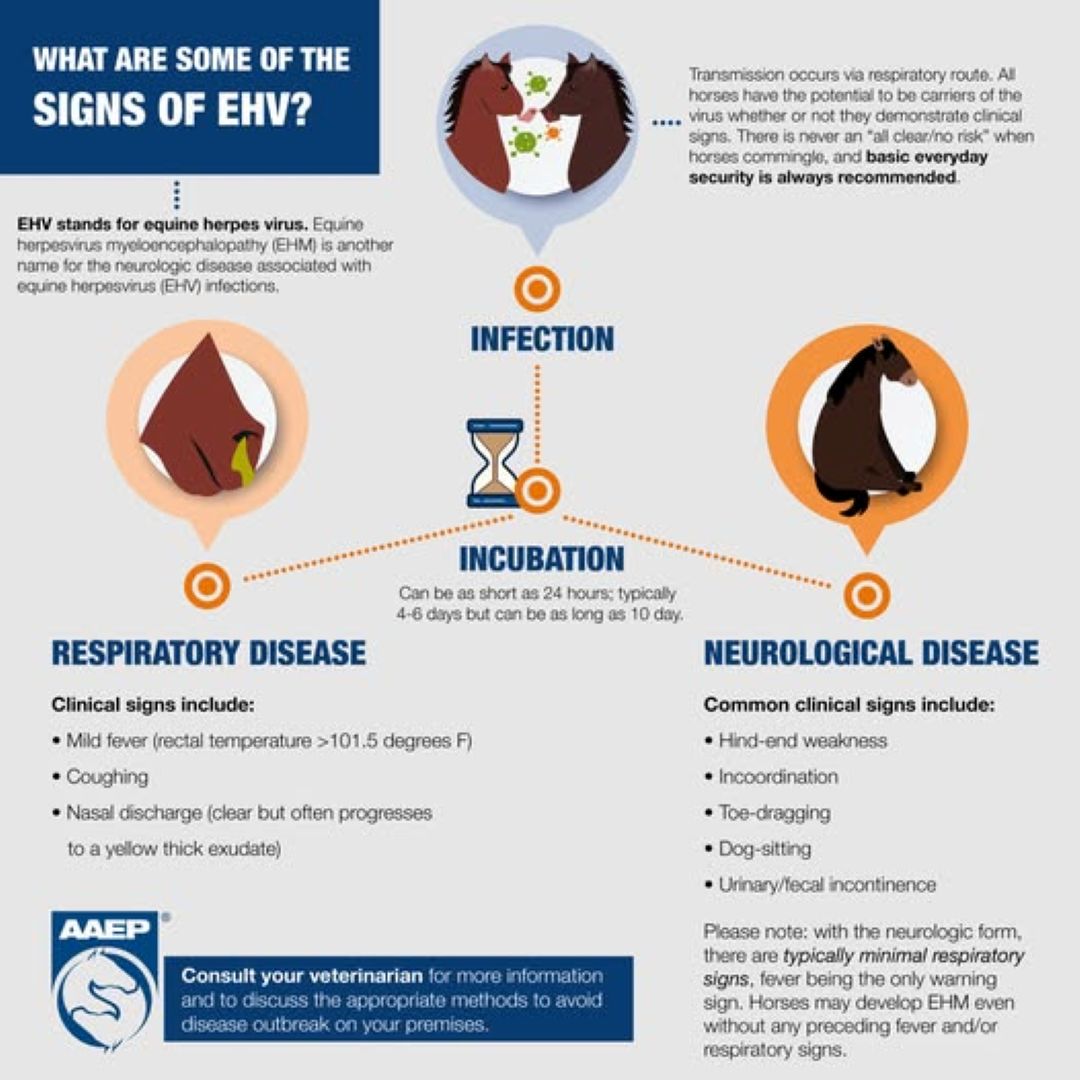
We’ve seen lots of questions about how Equine Herpesvirus-1 (EHV-1) spreads. Here are the basics:
✅ How It Spreads:
Nasal discharge and respiratory secretions are the primary source of EHV-1 infection. The incubation period is typically 4-6 days after exposure. and viral shedding typically lasts 7-10 days after start of clinical signs, but can be much longer.
-
Direct horse-to-horse contact (nose-to-nose) or contact with respiratory tract secretions (mucus)
-
Short-range (< 30 feet) droplets from coughing/snorting (within barns or trailers)
-
Contaminated surfaces and equipment (buckets, tack, grooming equipment, stalls, trailers) and human hands, clothing, and footwear
❌ What It Does NOT Do:
-
It does NOT travel long distances through the air or via birds.
✅ Prevention Tips
Proper disinfection and biosecurity is the best way to prevent EHV-1 infection.
-
Isolate exposed horses for at least 21–30 days
-
Avoid nose-to-nose contact and sharing water/feed buckets
-
Monitor temperatures twice daily; fever (>101.5 F) can be an early sign
-
Disinfect equipment and surfaces regularly using dilute bleach (1 part bleach to 10 parts water) after cleaning with soap and water
-
Practice good hand hygiene when handling multiple horses. Wash hands with soap and water, and use an alcohol-based hand sanitizer
If your horse may have been exposed, contact your veterinarian immediately and limit movement until cleared.
For more information, please visit the American Association of Equine Practitioners.